The best birthday ideas for ages 8 to 12
What works best at 8, 9, 10, 11 and 12 — ideas by age.
Read the article
Teens
Ten party formats that genuinely work for ages 10–15, with concrete advice on what to check before you book.
A birthday for a seven-year-old is simple: a balloon, a cake, a host, and success is guaranteed. A birthday for a twelve-year-old is another story entirely. Children that age know exactly what counts as "babyish", and they pass judgement in the first five minutes. Get the format wrong and they'll spend the rest of the afternoon on their phones.
This article walks through ten party formats that genuinely work for ages 10–15 in Belgrade, plus the practical things worth checking before you book anything.
With younger children the organiser picks the programme and the kids go along with it. With teenagers it's the reverse — the birthday child has firm opinions and the group has its own dynamic a parent doesn't control. Three things are most often underestimated:
A format that hits all three almost always works, no matter how "expensive" or "simple" it is.
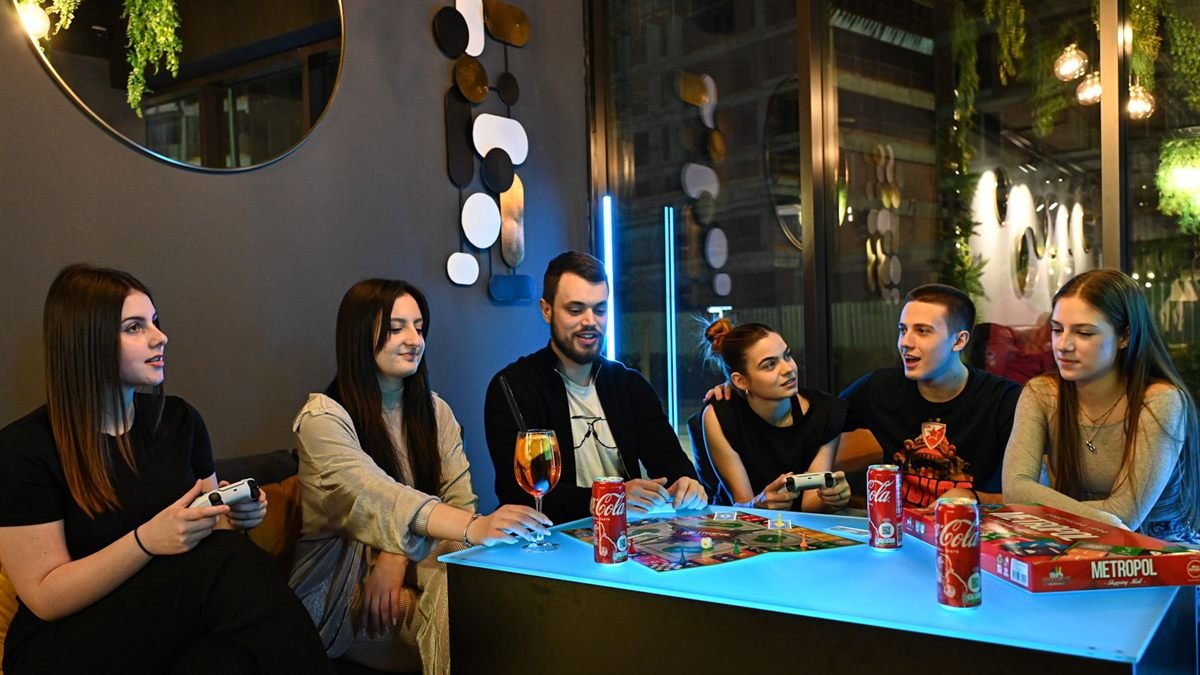
Consoles, big screens and a tournament format. It works because it's familiar ground — the kids know the rules and join in straight away. The trap is passivity: if everyone just sits, the energy drops after 40 minutes. Look for a venue that pairs gaming with something active.
Running, reflexes, physical challenges. The safest choice for a mixed group because it burns energy and levels out different interests. It matters that the space is private hire — part of the group shouldn't be wandering while the rest play.
Great for groups who know each other well, risky for mixed ones. If the children aren't close enough, nobody takes the microphone first. It works best as an add-on in the last half hour, not as the backbone of the party.
Team competition with a clear result — it hits the need to compete. Check how many players fit in one round: if the capacity is eight and there are twenty of you, half the group is always waiting.
Brilliant for smaller groups of six to ten. For twenty children it means splitting across rooms and slots, which breaks the party into pieces. A great choice for a close circle, awkward for a whole class.
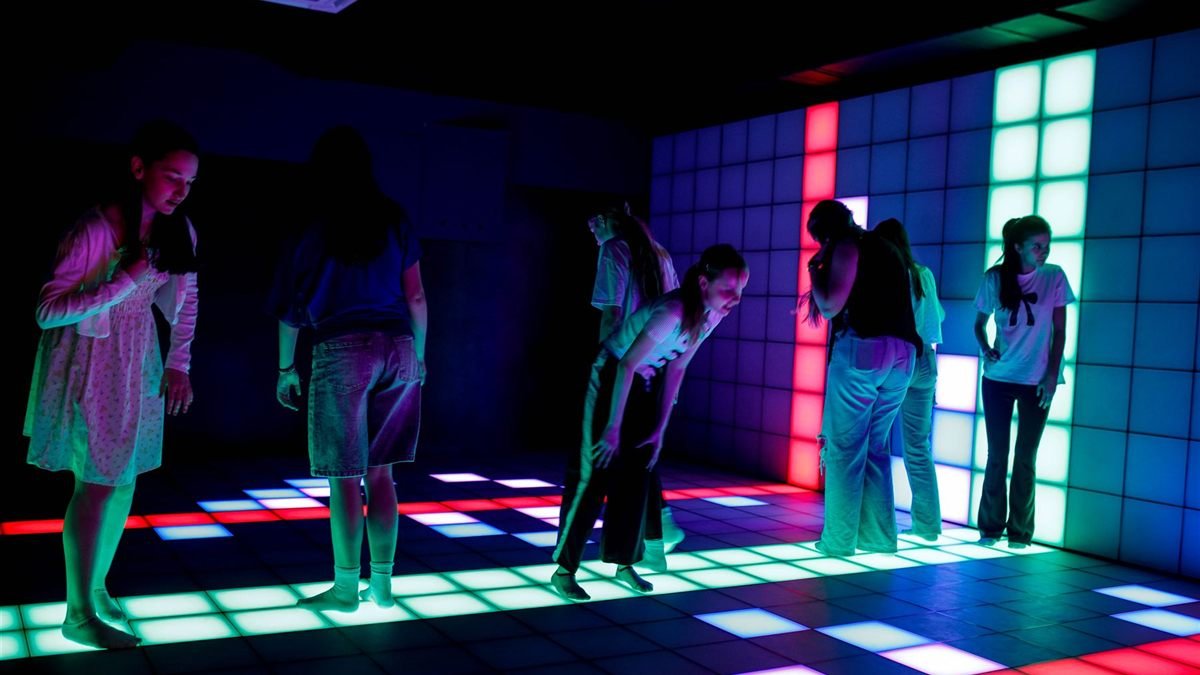
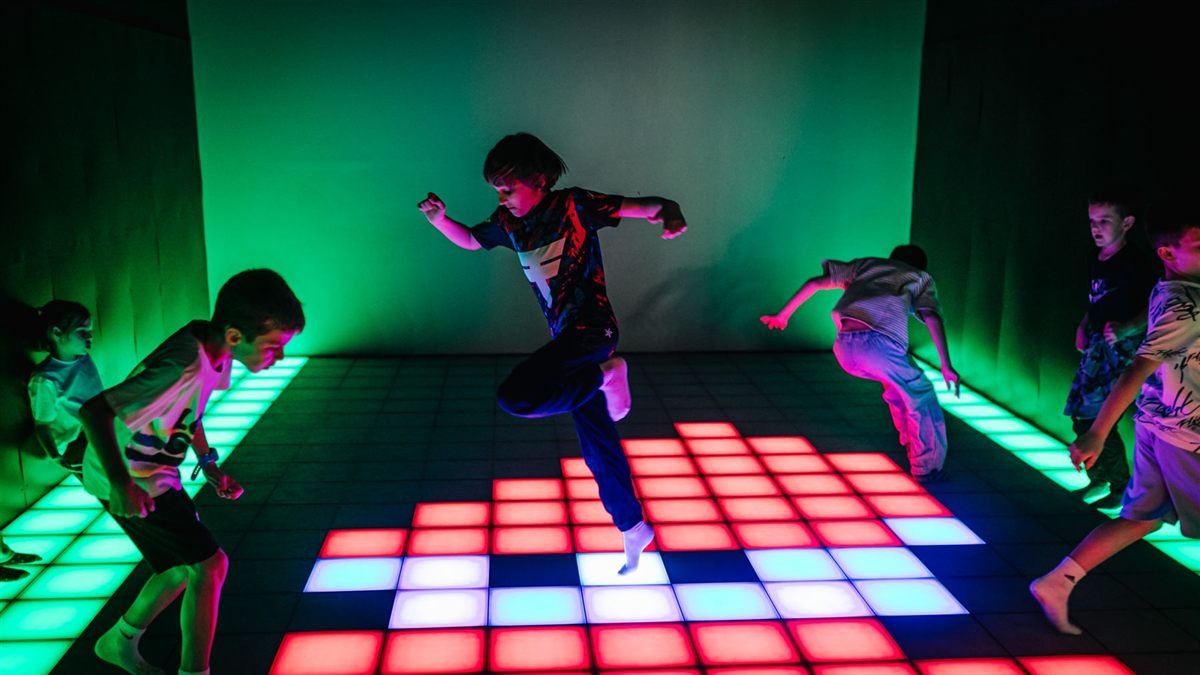
A floor that reacts to movement turns an ordinary game into a contest with points on screen. It works at this age because it feels technological rather than childish — and because every round has a measurable result. This is the format Pixel Blox was built around.
A strong effect, with one limitation: VR is mostly a one- or two-person experience at a time. As the only activity it creates queues. As one station within a wider party, it's excellent.
Football, basketball, an inflatable hall. Cheap and reliable, but it depends on whether the group likes sport. If some children don't play, they drop out of the party — and it shows.
Decoration, music and games built around one theme. With teenagers the theme has to be chosen together with the birthday child, otherwise it reads as a parent's idea. When it lands, it's remembered longer than any other format.
In practice the most successful option: two or three different activities in one slot, with a food break in the middle. Changing the rhythm holds attention and solves the boredom that sets in quickly at this age.
The programme is only half the story. These are the things that most often decide whether a party runs smoothly:
The last item looks trivial until you need it. Ask up front and get the answer in writing.
Pixel Blox was built as an arena, not a play centre — and for this age that's the key difference. The glowing LED floor reacts to movement, every game has points and a leaderboard, and the space looks like something the kids want to film.
The format is especially good when:
If you want to know exactly what each package includes, see the package overview or read our article on kids' birthday prices in Belgrade.
For ages 10–15 you aren't choosing an attraction — you're choosing a rhythm. A format that combines competition, physical activity and a good-looking space almost always beats one that offers a single thing, however impressive that thing is.
Ask the birthday child what they do not want, check five practical points from the list above and book early — weekend slots in Belgrade fill up two to three weeks ahead.
For ages 10–15, a group of 10 to 20 works best. Fewer than eight often means the group splits in two and the activities lose energy, while over 25 is hard to keep together without clear structure and hosts.
Not in the classic sense. What they need is a games leader — someone who explains the rules, runs the tournament and keeps score, but doesn't "entertain" them like little kids. The difference is fundamental and worth checking before booking.
Two to three hours is realistic. With older kids the first half hour goes on arriving and catching up, the middle is for activities, and the last 30–40 minutes for cake, food and phones. Under two hours feels rushed.
Pick a format that scales — team games and tournaments absorb a two- or three-year gap because the teams can be mixed. Formats with strict rules or a physical advantage for older kids quickly feel unfair, and children notice immediately.
At this age most parents drop the children off and come back later. So it matters that the venue has a tidy space to wait in if they want, and a clear schedule so everyone knows when it ends.
A party for a 10–15 crew?
Pixel Blox is built to hold the interest of those who are "too old for a play centre". Check the available slots.
Got a question or a tip from your own experience? Share it with other parents.
No comments yet. Be the first.
Keep reading
What works best at 8, 9, 10, 11 and 12 — ideas by age.
Read the article12 things parents should check before booking — a practical checklist.
Read the articleA look at play-centre prices, what a package includes and how to compare without hidden costs.
Read the article